
After judgment
How to Appeal an Eviction Judgment in Harris County
If the judge rules for your landlord, you may be able to appeal to the county court. An appeal means a fresh trial in one of Harris County's County Courts at Law. There are two separate things you have to do, and both matter. Missing either one can cost you the appeal or your ability to stay in your home while it is pending.
If you missed your hearing and a default judgment was entered against you, you may still be able to appeal within the same 5 days. You may also be able to ask the court to set the default judgment aside, in writing, within 5 days after notice of the judgment is sent, if you have a good reason for missing the hearing. Filing that request does not give you extra time to appeal. Reach out to an advocate right away to decide which fits, and please never miss a court date.
The 5-day clock.
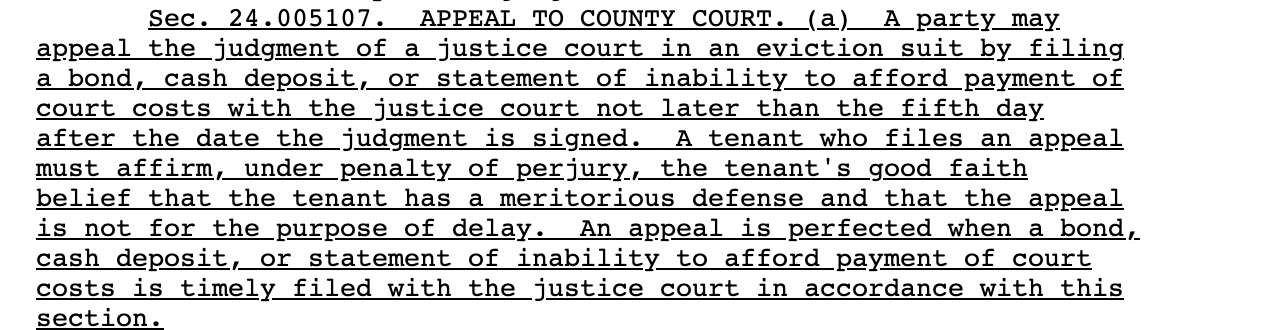
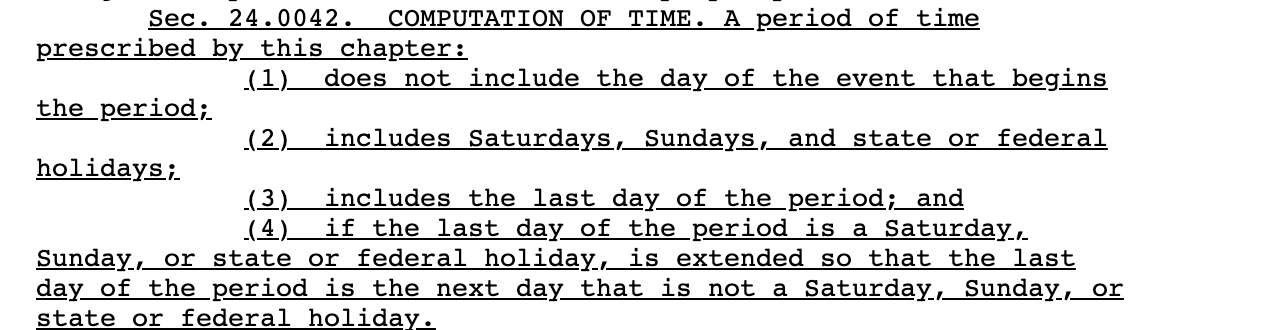
Everything starts from the date the judgment was signed. Ask the court clerk exactly what date that was, because it may not be the hearing date. You have 5 days, and they include weekends and holidays. If the last day falls on a weekend or holiday, it generally moves to the next day that isn't, but don't count on that. File early.
Step one: file the appeal.
File with the Justice of the Peace court that decided your case, no later than the fifth day after the judgment was signed. You file one of three things: an appeal bond, a cash deposit, or a Statement of Inability to Afford Payment of Court Costs. The judge states the bond amount in the judgment. When you file, you have to swear, under penalty of perjury, that you believe in good faith that you have a real defense and that you are not appealing just to delay the case.
If you cannot afford the bond, you file the Statement of Inability instead. It is not a short note. It is a sworn statement, signed in front of the court clerk or a notary. It asks about you and your household: your income and any spouse's income, any government benefits, other income, cash and savings, property you own other than household furnishings, clothes, tools of a trade, and personal effects, your debts and monthly expenses, and the number and ages of your dependents and where they live. The court has a form you can use. Fill it out accurately and completely, because mistakes can put your appeal at risk. Your landlord can contest it within 5 days, and then there is a hearing where you have to show, with documents or credible testimony, that you cannot pay. Bring proof.
Step two: pay rent into the court.
This is separate from step one. The Statement of Inability takes the place of the bond. It does not take the place of the rent payments.
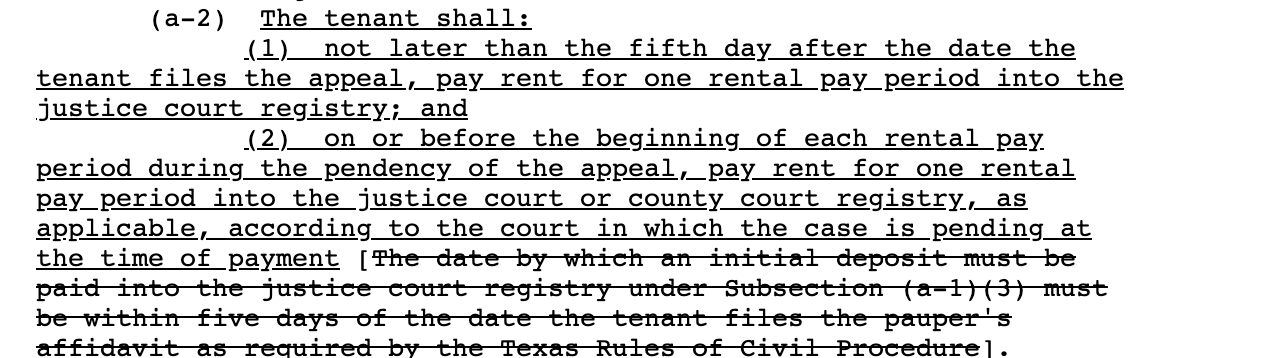
The judgment states how much rent you must pay each rental period while the appeal is pending. When you file the appeal, the court must give you a written notice that lists the amount, whether it must be paid in cash, a cashier's check, or a money order, who to make it out to, the exact date it is due, and what time the court closes that day. You must pay one rental period's rent into the court within 5 days after you file the appeal, and then pay again at the beginning of each rental period while the appeal is pending. The notice warns that if you don't pay on time, the court may issue a writ of possession without a hearing.
The safest plan is to do both steps within 5 days of the judgment, and to follow the date on the court's notice. If part of your rent is paid by a government agency, either side can contest what portion you owe within 5 days of the judgment. The money you pay into the court can be released to your landlord on request, so plan on it not coming back to you. It covers only the rental period you paid for.
If you cannot afford the rent payment, talk to the court and a legal aid advocate right away.
What happens next.
When the appeal is filed correctly and the rent is paid, the Justice of the Peace court sends your case file to the county court a few days later. The county court is required to hold a trial within 21 days after it receives the file. It is a fresh trial, so you get a real second chance to present your case. Bring the same kinds of things you would bring to any hearing: your lease, the notice, payment records, texts or emails, and photos.
What to do right away.
Ask the clerk for the date the judgment was signed. Save copies of everything you file, and ask for a stamped copy that shows the date and time. Photograph your court notices and save them in your NeighborSTAND Documents. This is hard to do correctly alone, and a filing mistake can lose you the appeal, so reach out to a legal aid advocate the same day. NeighborSTAND's Resources directory lists legal aid groups.
Read the law yourself.
These pictures are the wording from the Texas Legislature's own website. Tap any picture to open the full bill, Senate Bill 38. Underlined text is the new law. Text in brackets with a line through it is old wording that was removed.
The deadline to appeal, and the good-faith statement you must swear to, from Section 24.005107(a):
Paying rent into the court while the appeal is pending, from Section 24.0053(a-2):
How days are counted, from Section 24.0042:
Open Senate Bill 38 on the Texas Legislature website
This is general information, not legal advice. Laws and court practices change and can differ by court. For help with your exact situation, talk to a legal aid advocate or an attorney.