
Housing after
Finding Second‑Chance Housing in Harris County
Second-chance housing means a rental where the landlord will consider applicants who have a past eviction. Each landlord sets its own rules. Some may ask for extra safeguards, like a larger security deposit or a co-signer, which is a person who promises to cover the rent if you can't. Some may want to see steady income now.
Why it matters.
An eviction case is a public court record, and it can show up on background checks and tenant screening reports. Our article on whether an eviction can be removed from your record explains more. Many standard rental listings filter out applicants with an eviction, so it helps to look for landlords who say they will consider your situation.
Listings in NeighborSTAND.
NeighborSTAND is adding second-chance housing listings to its Resources directory. There are none listed yet, so please check back. When listings appear, a paid listing will be labeled Sponsored, and a listing does not guarantee that you will be approved.
Where to start now.
Call 2-1-1, the free 24-hour referral line for housing help. Ask about housing programs and about coordinated intake for people who are homeless or about to be, in case you need it. You can also ask a legal aid advocate, or a housing counseling agency approved by HUD, to point you to options. Be careful with any website or person who promises housing in exchange for a fee. A landlord should give you their written selection criteria before you pay an application fee.
What Texas law says a landlord must give you.
Under Section 92.3515 of the Property Code, when you are given a rental application, the landlord must make available a printed notice of their tenant selection criteria and the grounds on which they may deny you, including your previous rental history. If the landlord rejects you and never made that notice available, the landlord must return your application fee and any application deposit. The notice you sign may say that if you don't meet the criteria, your application may be rejected and the fee will not be refunded. So ask for the criteria first, and ask whether a past eviction will disqualify you, before you pay anything.
How to prepare.
Gather proof of your current income and any references you have. Keep the papers that show how your case ended, such as a dismissal order, a judgment, a settlement, or proof that you paid. When you talk to a landlord, be upfront and brief about your eviction history, and focus on what has changed, like steady income or a co-signer. Ask about any deposit or co-signer requirements.
NeighborSTAND has a letter of explanation builder and a budget worksheet in the move-out section of your case that can help you get ready.
Second-chance housing is not a guarantee, but it can be a real path forward. Our article on rebuilding your rental history has more ideas.
Read the law yourself.
This is the wording from the Texas Legislature's own website, from Section 92.3515 of the Property Code. Tap the picture to open Chapter 92.
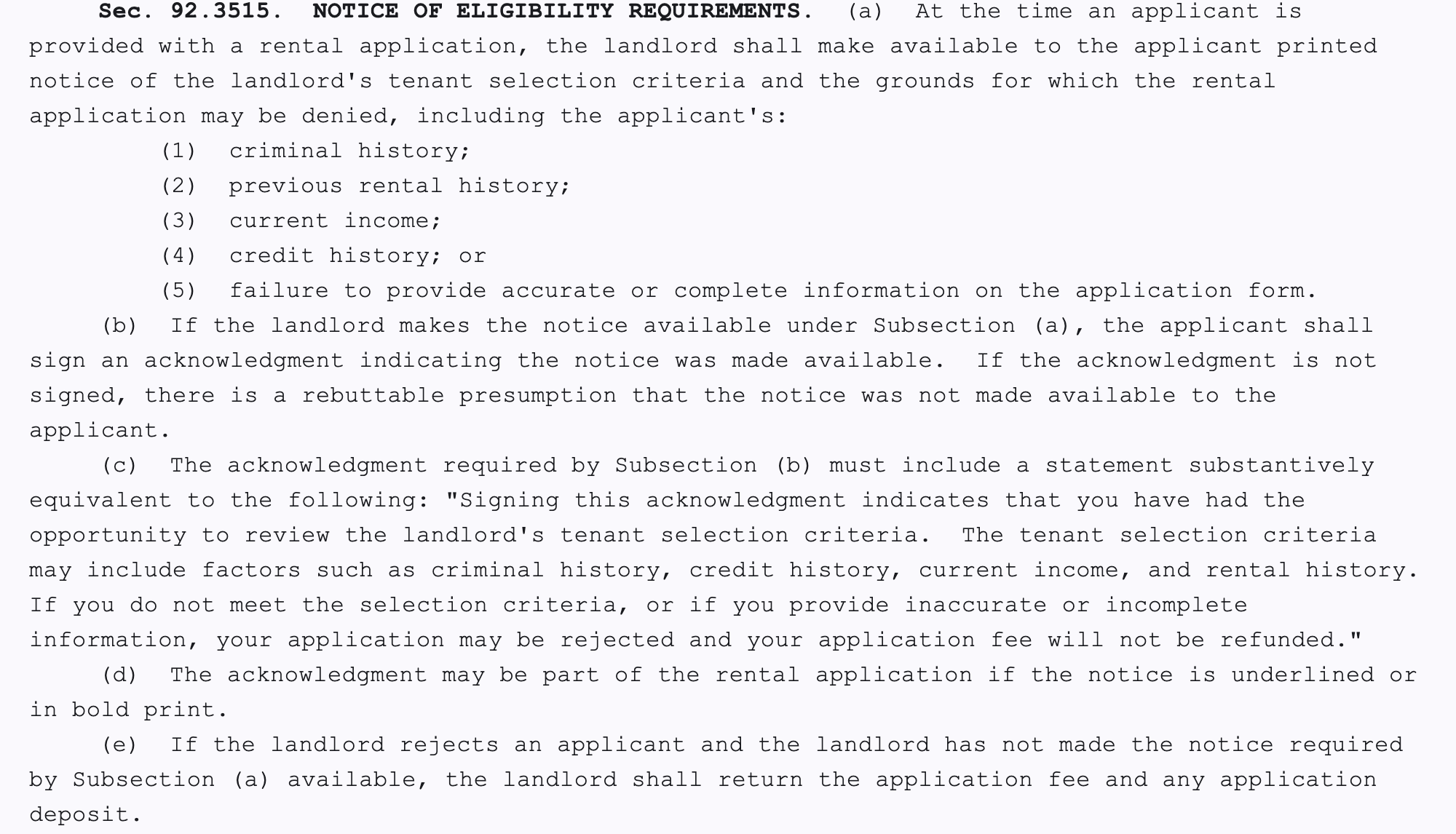
Open Texas Property Code Chapter 92 on the Texas Legislature website
This is general information, not legal advice. Laws and court practices change and can differ by court. For help with your exact situation, talk to a legal aid advocate or an attorney.