
Know your rights & defenses
How a Notice to Vacate Must Be Delivered in Harris County
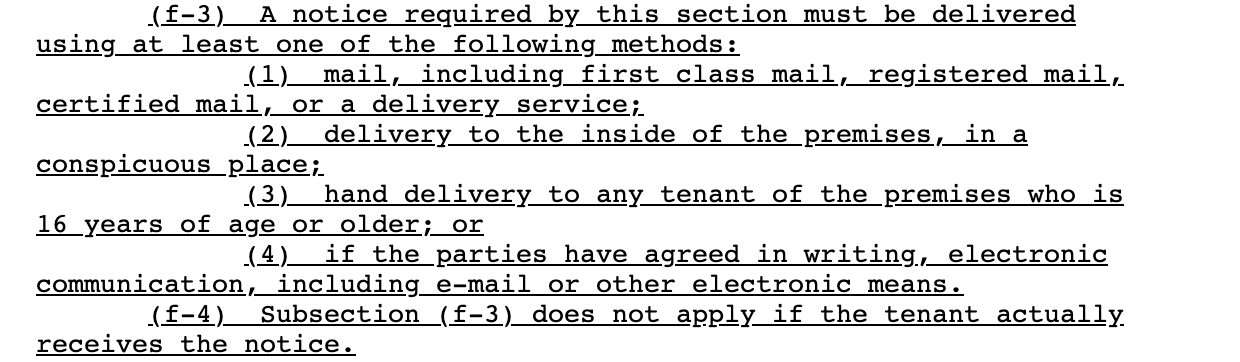
Texas law lists the ways a landlord can deliver a Notice to Vacate. The rule is in the Texas Property Code, Section 24.005(f-3), added by Senate Bill 38. It applies across Texas, including Harris County, to eviction cases filed on or after January 1, 2026. A notice can be delivered by mail (including first class mail, registered mail, certified mail, or a delivery service), by leaving it inside your home in a conspicuous place, by hand to any tenant of the home who is 16 years old or older, or electronically if you and your landlord have agreed to that in writing.
Taping a notice only to the outside of your door is not one of those listed methods. But the law also says those delivery rules do not apply if you actually receive the notice. So don't ignore a notice because of how it was delivered. Even if the delivery method was wrong, you should treat the notice as real and act on it.
Why does this matter? A Notice to Vacate is the first step before a landlord can file an eviction case. If a notice wasn't delivered properly and you never got it, it may not be valid, and that could matter later if the case is contested. But the rules changed on January 1, 2026, and they may limit what you can argue in some cases, so a delivery problem should not be something you count on to protect you.
Read the law yourself. This is the wording from the Texas Legislature's own website. Tap the picture to open the full bill, Senate Bill 38, on the Texas Legislature website.
Open Senate Bill 38 on the Texas Legislature website
What to do.
Read the notice carefully and note how it reached you. Photograph it, including the date, and save it in your NeighborSTAND Documents. If it was left on the outside of your door, write down the date you first saw it and how you found out about it.
Then reach out to a legal aid advocate now, before anything is filed. An advocate can look at your specific notice and tell you whether the delivery matters in your situation. NeighborSTAND's Resources directory lists local legal aid groups.
Every eviction case is different, so it's always a good idea to confirm the details with a qualified legal advocate before making any decisions.
This is general information, not legal advice. Laws and court practices change and can differ by court. For help with your exact situation, talk to a legal aid advocate or an attorney.