
Know your rights & defenses
Understanding Repair‑and‑Deduct in Harris County
Texas law lets a tenant, in certain serious situations, have a repair made and deduct the cost from rent without going to court. It is narrow, and getting a step wrong can mean you end up facing an eviction for not paying rent. Talk to a legal aid advocate before you deduct anything.
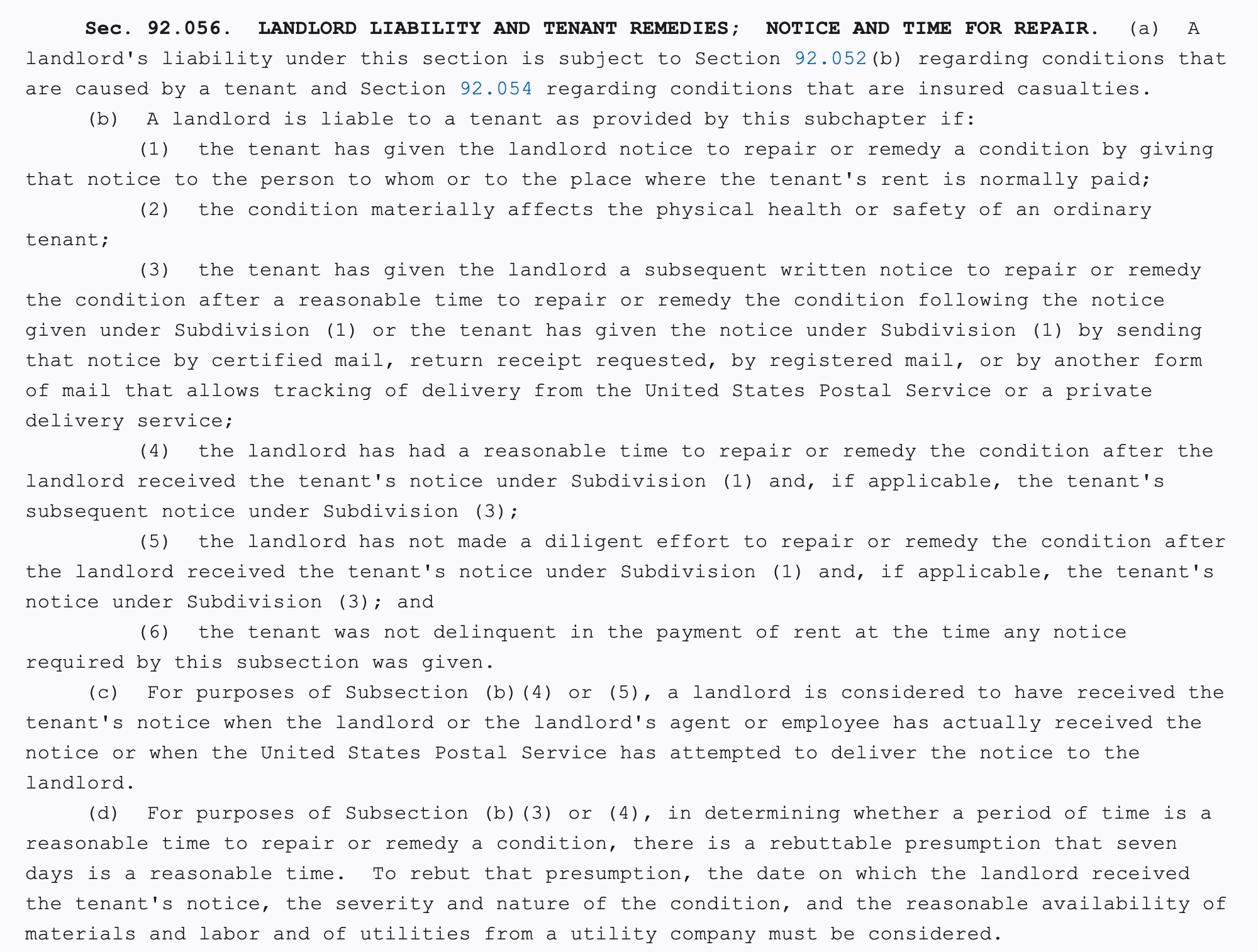
You must not be behind on rent.
The law says this only works if you were not late in paying rent at the time you gave the required notices. If you are already behind, don't rely on repair-and-deduct.
Which problems qualify.
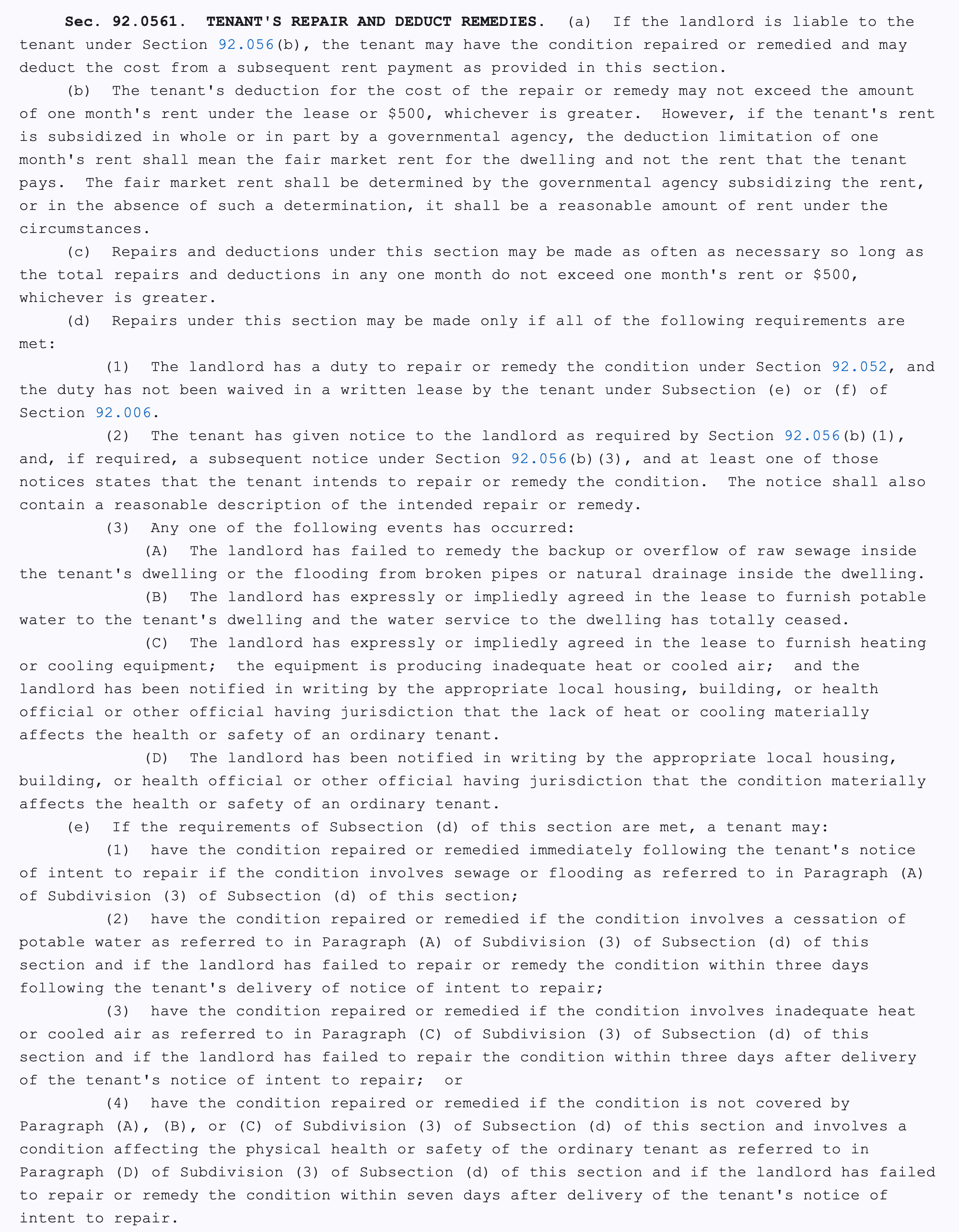
The condition must materially affect the physical health or safety of an ordinary tenant, and your landlord must have a legal duty to repair it. Then at least one of these must be true: your landlord has failed to fix a sewage backup or flooding from broken pipes or drainage inside your home; the water service your landlord agreed to provide has totally stopped; the heating or cooling your landlord agreed to provide isn't working and a local housing, building, or health official has told the landlord in writing that it materially affects health or safety; or an official has told the landlord in writing that the condition materially affects health or safety. A problem like a dripping faucet does not qualify on its own.
The notices.
Your first notice must be in writing and given to the person or place where you normally pay rent. If you send that first notice by certified mail with a return receipt, registered mail, or another tracked mail or delivery service, that can be enough. If you don't, you have to send a second written notice after giving the landlord a reasonable time to fix the problem. At least one of the notices must say that you intend to make the repair yourself and include a reasonable description of the repair you intend to make.
NeighborSTAND has a repair request letter tool in the app that can help you write the first request. It asks for the repair within a reasonable time, but it does not say that you intend to make the repair yourself, and the law requires that in at least one notice. An advocate can help you get the wording right.
How long you have to wait.
The law presumes that seven days is a reasonable time for a landlord to make a repair. Once the requirements are met, you may have the repair made right after your notice of intent to repair if it is a sewage or flooding problem. For water that has totally stopped, or heating or cooling that isn't working, you may have it done if the landlord hasn't fixed it within 3 days after your notice of intent. For other health or safety conditions, it is 7 days.
Who can do the repair.
The repair must be done by an independent company, contractor, or repairman, and if your city requires a license, that person must be licensed. It generally can't be you, your immediate family, your employer or employees, or a company you own part of, unless you and your landlord agree otherwise. The work must follow building codes, including a permit when one is required. You can't hire someone for more than you are allowed to deduct.
How much you can deduct.
The total repairs and deductions in any one month can't go over one month's rent or $500, whichever is greater. If a government agency pays part of your rent, the limit is based on the fair market rent for your home.
After the repair.
When you pay the rest of your rent, give your landlord a copy of the repair bill and the receipt showing it was paid. Keep copies of every notice, mail receipt, bill, and photo.
If your landlord files an eviction.
Section 92.335 of the Property Code says a rent deduction lawfully made under this chapter is a defense to not paying the rent, to the extent the chapter allows. If a step was missed, the deduction may not count, and you could still owe the rent. Don't simply stop paying rent because something is broken.
Read the law yourself.
These pictures are the wording from the Texas Legislature's own website, from Sections 92.056 and 92.0561 of the Property Code. Tap any picture to open Chapter 92.
The notice rules, and the rule that you must not be behind on rent, from Section 92.056:
The qualifying problems, waiting times, and deduction limit, from Section 92.0561:
Open Texas Property Code Chapter 92 on the Texas Legislature website
This is general information, not legal advice. Laws and court practices change and can differ by court. For help with your exact situation, talk to a legal aid advocate or an attorney.