
Know your rights & defenses
Understanding Retaliation as a Defense in Texas Eviction Cases
Retaliation is one of the two defenses that the Texas Property Code names for eviction cases. It is narrow. It is not a general fairness argument, and it has exceptions that matter a lot. The rules are in Sections 92.331 through 92.335.
What the law protects.
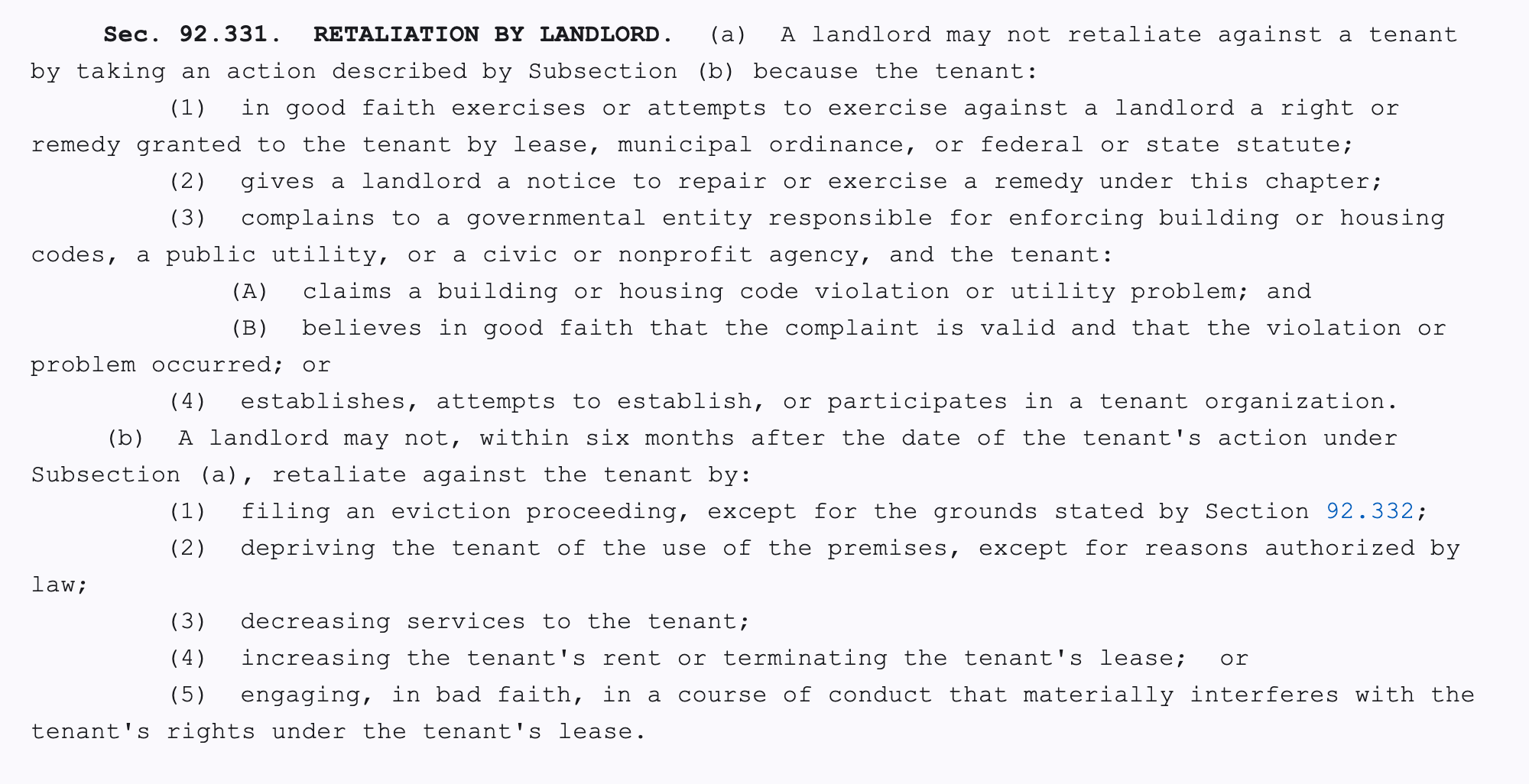
A landlord may not retaliate against you because, in good faith, you did one of these things: used or tried to use a right or remedy you have under your lease, a city ordinance, or a state or federal law; gave your landlord a notice to repair or to use a remedy under the repair chapter; complained to a government agency that enforces building or housing codes, to a public utility, or to a civic or nonprofit agency, about a code violation or utility problem that you believe in good faith is real; or started, tried to start, or took part in a tenant organization.
What counts as retaliation.
The law says a landlord may not do any of these within six months after the date of what you did: file an eviction, deprive you of the use of your home except for legal reasons, decrease your services, raise your rent or end your lease, or, in bad faith, engage in a course of conduct that materially interferes with your rights under the lease.
The exceptions.
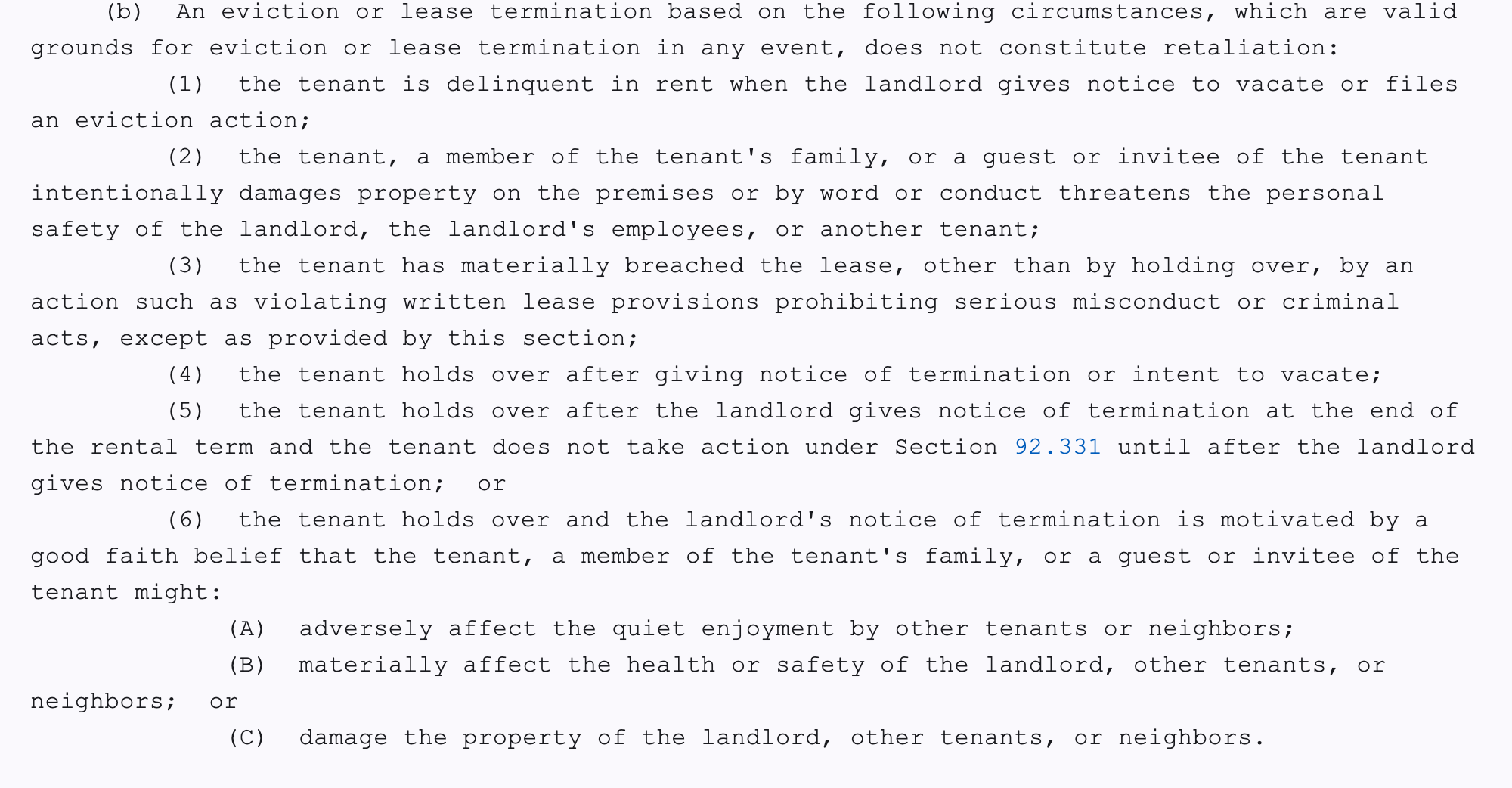
An eviction is not retaliation if you were behind on rent when the landlord gave you notice to vacate or filed the eviction. That covers a large share of eviction cases. It is also not retaliation if you, your family, or a guest intentionally damaged property or threatened the safety of the landlord, the landlord's employees, or another tenant. It is not retaliation if you seriously broke the lease, such as by violating written rules against serious misconduct or criminal acts. And it is not retaliation in certain situations where you stayed after giving notice that you were leaving, or after the landlord ended the lease for a good faith reason. Even outside these exceptions, a landlord is not liable if they prove the action was not taken for retaliation.
How it works in an eviction case.
Section 92.335 says retaliation is a defense in an eviction suit. If you think it applies, tell an advocate right away, and keep the papers that show the timeline. Talk to them early, because timing and the exceptions decide whether it can work.
Money for retaliation is a separate case.
The law also lets a tenant who was retaliated against recover a civil penalty of one month's rent plus $500, actual damages, court costs, and reasonable attorney's fees, less any rent or other sums the tenant owes the landlord. That is brought in a separate action. Other court actions under that chapter may not be joined with an eviction suit or raised as a defense or crossclaim in it.
What to gather.
Write down the dates: when you asked for repairs or gave notice, when you complained to an agency, when your landlord responded, and when you got the eviction notice. Keep emails, letters, work orders, and copies of any complaints. Also keep proof of whether your rent was paid up at the time.
What is not a retaliation defense.
Feeling that the eviction is unfair, or facing hardship like a job loss or medical bills, is not retaliation on its own. Those situations may open other doors, such as looking for rental assistance or negotiating with your landlord, but they are separate from this defense.
If you think you were retaliated against, reach out to a legal aid advocate who can review your specific facts. NeighborSTAND's Resources directory lists legal aid groups in Harris County.
Read the law yourself.
These pictures are the wording from the Texas Legislature's own website. Tap any picture to open Chapter 92.
What the law protects and what counts as retaliation, from Section 92.331:
The exceptions, from Section 92.332(b):
Open Texas Property Code Chapter 92 on the Texas Legislature website
This is general information, not legal advice. Laws and court practices change and can differ by court. For help with your exact situation, talk to a legal aid advocate or an attorney.