
Understanding the process
Summary Disposition Under SB 38: Why You Have Only 4 Days to Respond
Summary disposition is a new part of Texas eviction cases under Senate Bill 38, for cases filed on or after January 1, 2026. It means the judge can decide the case without holding a trial. It is one of the most important things to understand about the new rules, because you can lose your chance to be heard if you miss a very short deadline.
How it works.
Your landlord can include a sworn motion for summary disposition together with the eviction petition. The motion has to lay out the facts it relies on, and the documents it relies on must be attached. If the motion shows there are no genuinely disputed facts that would prevent a judgment for the landlord, the judge may rule for the landlord without a trial.
The 4-day deadline.
To keep that from happening, you have to file a written response no later than the fourth day after you are served with the landlord's sworn petition. Your response has to set out the facts you rely on and include any documents that support them. If your landlord filed this kind of motion, the first page of your court papers, called the citation, must warn you about it, in English and in Spanish. If you see that warning, treat it as urgently as a hearing date. The days include weekends, so count carefully and ask the court clerk or an advocate to confirm your exact last day.
What the judge does.
If your response shows there is a real dispute about important facts, and service on you was proper, the judge sets a trial between 10 and 21 days after your landlord filed the case. If your response does not show a real dispute, the judge may rule for the landlord anyway. A judge may look at a response filed after the 4 days if it shows a real dispute and it is filed before a judgment is entered, but don't count on that.
What a response can say.
Say plainly what facts you dispute, and attach documents that back you up. For example, you might dispute that the notice was proper, that the amount claimed is correct, that the eviction is retaliation, or that you lawfully deducted repair costs from your rent. Useful papers include the notice you received, payment records, texts or emails with your landlord, and photos. The 2026 changes narrowed what can be argued in some cases, so an advocate can help you decide what to include.
If a judgment is entered.
A judgment on summary disposition has the same effect as any other eviction judgment. That means the same short 5-day clock applies for an appeal. Appeals are covered in a separate article.
What to do right away.
Photograph your court papers and save them in your NeighborSTAND Documents. Reach out to a legal aid advocate the same day, since this is one of the most time-sensitive moments in the whole process. NeighborSTAND's Resources directory lists legal aid groups. Call the court clerk and ask how to file a written response at your court.
Read the law yourself.
This is the wording from the Texas Legislature's own website, from Section 24.005106(a). Tap the picture to open the full bill, Senate Bill 38. Underlined text is the new law.
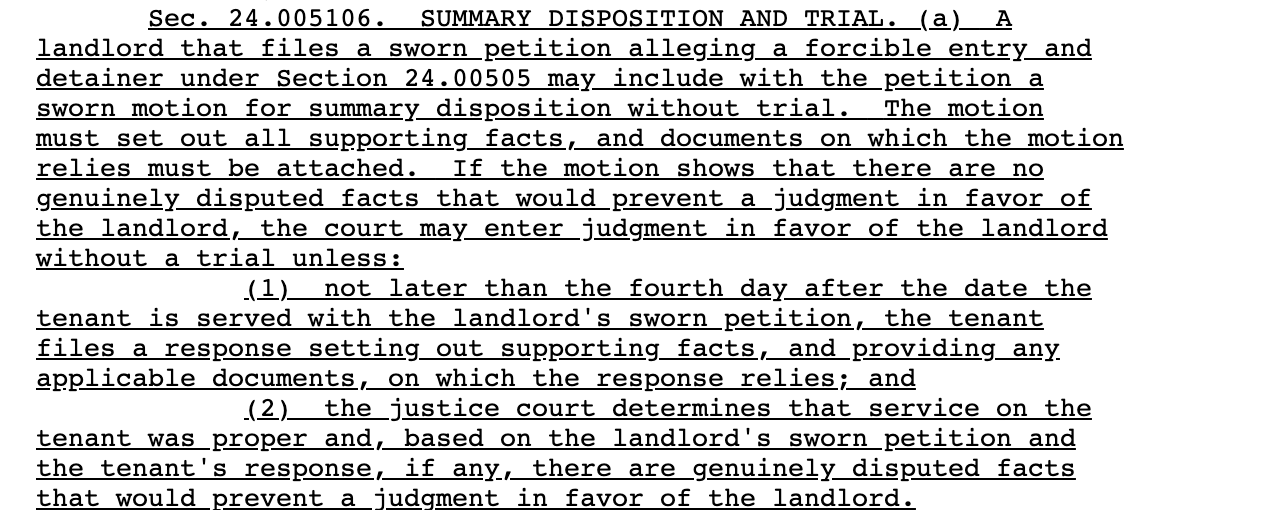
Open Senate Bill 38 on the Texas Legislature website
This is general information, not legal advice. Laws and court practices change and can differ by court. For help with your exact situation, talk to a legal aid advocate or an attorney.